Key takeaways
- Find the best door mats for entryways and porches, from waterproof rubber scrapers to absorbent indoor mats that trap mud, snow and wet paw prints.
- Top Pick: Gorilla Grip All Season WeatherMax Door Mat
- Runner-up: Mibao Front Door Mat
- Also consider: DII Rubber Doormat, Scroll Design
A good door mat is the hardest-working few square feet in a home. Every pair of shoes and every set of paws crosses it, and during wet or muddy months it is the only thing standing between the weather outside and your floors inside. The best door mats scrape grit off soles before it can scratch hardwood, soak up meltwater before it pools, and lie flat instead of bunching under a swinging door.
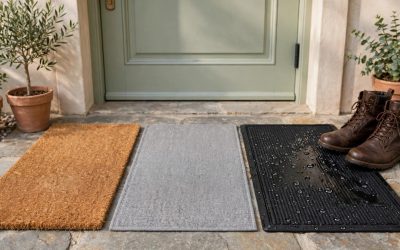
This guide compares five mats that cover the main jobs an entryway needs: a waterproof all-season mat for an exposed front door, a heavy-duty dirt trapper for mud-prone back doors, a decorative rubber mat, a classic coir welcome mat for covered porches, and a soft, absorbent mat for just inside the threshold. Between them, most single-door and double-door setups are covered, indoors and out.
As an Amazon Associate, we earn from qualifying purchases.
Quick answer
For most homes, the Gorilla Grip WeatherMax is the best all-round door mat: waterproof, low profile and tough in every season. Choose the Mibao for heavy mud, the Barnyard Designs coir mat for a classic welcome look, and the BEQHAUSE as the absorbent indoor partner just inside the door.
Gorilla Grip All Season WeatherMax Door Mat

The WeatherMax is built for doors that take real weather. Its natural rubber body is fully waterproof, so rain, slush and melting snow sit on the mat instead of soaking through to the floor beneath. Deep grooves scrape soles as people cross, and a beveled rubber border with a retention dam holds captured water and grit on the mat until it is shaken or hosed off.
At roughly a third of an inch thick, it clears most door swings while feeling substantial underfoot, and the rubber resists staining and fading through long stretches outdoors. The 29 by 17 inch size suits a standard single door, with larger sizes covering wider entries. Cleanup is simple: shake it out, vacuum it, or hose it down and let it dry.
Specs:
– Size: 29 x 17 inches, with larger sizes available
– Material: natural rubber
– Thickness: about 0.3 inches
– Surface: deep-grooved scraping pattern with beveled border and retention dam
– Care: shake out, vacuum or hose off
– Use: indoor or outdoor, including exposed entryways
Best for: Exposed front doors that face rain, snow and year-round grit.
Mibao Front Door Mat

The Mibao is a dirt trapper in the classic mold: a tough polypropylene surface with deep grooves over a natural rubber backing. The grooved face pulls mud, sand and road grit down into its channels, where it stays out of sight and off your floors. The rubber back gives the mat real heft and grip, so it tends to stay where it is placed instead of creeping across tile or concrete.
Its low pile keeps it clear of most door swings, and the surface shrugs off the treatment a back door or garage entry dishes out. Unusually for a mat this sturdy, it is machine washable, and can also be shaken, vacuumed or rinsed between washes. The standard 29.5 by 17 inch size fits a single door, with bigger sizes for wider entries and mudrooms.
Specs:
– Size: 29.5 x 17 inches, with larger sizes available
– Surface: polypropylene with deep dirt-trapping grooves
– Backing: natural rubber
– Pile height: low profile, about 0.3 inches
– Care: machine washable; also shake, vacuum or rinse
– Use: indoor or outdoor entryways, mudrooms and garage doors
Best for: Mud-heavy households, back doors and entries used by dogs.
DII Rubber Doormat, Scroll Design

DII’s rubber doormat takes a different approach: instead of trapping water, it lets water fall through. The open scroll pattern is cut through solid recycled rubber, so rain and meltwater drain straight down rather than pooling where the next person stands. The ironwork-style design makes it one of the better-looking options for a front step, and the open pattern still gives soles plenty of edges to scrape against.
Solid rubber gives this mat serious weight for its size, keeping it planted in wind and heavy foot traffic. There is no fabric to mildew and no pile to crush, and cleaning takes seconds with a shake or a hose. At 18 by 30 inches it covers a standard single door with room to spare. It offers no absorbency, so pairing it with an indoor mat completes the setup.
Specs:
– Size: 18 x 30 inches
– Material: recycled rubber
– Design: open scroll pattern that drains water through
– Backing: solid rubber body, naturally non-slip
– Care: shake out or hose off
– Use: outdoor entryways, patios and porches
Best for: Rainy climates and anyone who wants a decorative mat that drains instead of soaking.
Barnyard Designs Natural Coco Coir Welcome Doormat

Coir, the coarse fiber from coconut husks, has been the classic welcome-mat material for generations because stiff bristles are excellent at scrubbing mud and debris from soles. This Barnyard Designs mat pairs that traditional coir face, finished with a bold welcome greeting, with a heavy-duty PVC backing that keeps it from sliding on porch boards and concrete. The 17 by 30 inch size suits most single doors, and a larger 24 by 36 inch version covers wider entries.
Coir asks for one compromise: it performs best under a covered porch, since repeated soaking shortens its life and darkens the fibers. Expect some shedding in the first weeks; a shake outdoors now and then handles it. In return, you get the warm farmhouse look synthetic mats imitate, plus genuinely aggressive scraping.
Specs:
– Size: 17 x 30 inches, with a 24 x 36 inch size available
– Material: natural coconut coir fibers
– Backing: heavy-duty PVC
– Thickness: about 0.5 inches
– Care: shake or brush clean; keep under cover for longest life
– Use: outdoor, best on covered porches and entryways
Best for: Covered porches and farmhouse-style entries that need strong scraping and a classic look.
BEQHAUSE Dirt Trapper Door Mat

The BEQHAUSE is the indoor half of a two-mat system, designed to sit just inside the door and catch what the outdoor mat missed. Its dense polypropylene surface absorbs moisture from wet shoes and paws while trapping fine dirt scraping mats leave behind, and the mixed-tone fibers hide what it collects between cleanings. A TPR backing grips hard floors without the bulk of a rubber body, and reinforced edges help it lie flat.
At 0.4 inches thick it is slim enough for most door clearances, yet soft enough for socks or bare feet. When it gets grubby, it goes in the wash on a cold cycle, or can be vacuumed, shaken or rinsed. The 20 by 32 inch footprint is wider than a typical outdoor mat, giving wet footwear a proper landing zone, and larger sizes extend coverage into hallways and mudrooms.
Specs:
– Size: 20 x 32 inches, with larger sizes available
– Surface: dense polypropylene, absorbent and stain resistant
– Backing: non-slip TPR
– Thickness: 0.4 inches
– Care: machine wash cold separately; also vacuum, shake or rinse
– Use: indoor entryways, mudrooms and hallways
Best for: The spot just inside the door, especially in homes with dogs and wet-weather foot traffic.
How to choose
Start with door clearance. Measure the gap between the bottom of your door and the floor, then pick a mat thinner than that gap so the door swings freely. Many exterior doors leave only a half inch or so, which is why most of the mats above stay at or under that mark. A mat that is too thick will drag, curl and eventually tear.
Next, check the backing. A rubber or TPR backing grips hard surfaces and keeps the mat from skating underfoot. Solid rubber mats like the WeatherMax and the DII are their own backing, which is why they stay put so well outdoors. On delicate floors, lift any mat periodically to let the floor beneath dry.
Consider surface type next. Scraping surfaces (coir bristles, grooved rubber, open lattice) remove mud and grit but absorb little. Absorbent surfaces (polypropylene or polyester pile) soak up water but are poor scrapers. Muddy seasons call for both: a scraper outside and an absorbent mat inside. A single mat is a reasonable compromise only at a low-traffic side door.
Placement matters too. Outdoor mats need to tolerate sun, rain and freezing without cracking, which favors rubber and coir under cover. Indoor mats can be softer and more absorbent because they live out of the weather. Finally, size the mat to the door: a standard single door wants a mat at least 29 to 30 inches wide so both feet land on it, while double doors and French doors need a wide mat in the 47 to 72 inch range.
Who should skip
Skip the single-mat approach if your entry sees muddy boots, melting snow or multiple dogs daily; no one mat scrapes and absorbs equally well. Skip coir if your porch is fully exposed to rain, since soaked coir wears out quickly and can stain light concrete or decking. Skip thick, high-pile mats if your door clearance is tight, and skip decorative scroll-style rubber mats if absorbency is your main problem, because open designs drain water rather than holding it. Anyone outfitting a garage or workshop floor should look at heavy-duty utility mats instead.
FAQ
What size door mat do I need for a standard door?
For a typical 36-inch single door, choose a mat at least 29 to 30 inches wide and 17 to 18 inches deep, so both feet land fully on it with each step. Double doors and French doors call for wide mats around 47 to 72 inches, or the largest size a product line offers.
Should a door mat go inside or outside the door?
Ideally, both. An outdoor mat does the scraping, removing mud, grit and snow before it reaches the threshold, while an indoor mat absorbs the moisture that remains. If you can only have one, put a waterproof scraping mat outside at an exposed door, or an absorbent mat inside at a covered door.
How do I clean a door mat?
Rubber and coir mats need only a shake outdoors and an occasional hose-down, then time to dry fully before going back into service. Absorbent indoor mats such as the BEQHAUSE and Mibao can be vacuumed for daily grit and machine washed cold when they get dingy, following the care notes for that model.
Can a door mat damage hardwood or vinyl floors?
It can if moisture gets trapped underneath, so lift indoor mats regularly to let the floor dry, especially in wet seasons. Choose a mat with a smooth rubber or TPR backing rather than a rough or latex one, avoid leaving a soaked mat in place for days, and never place a wet coir mat directly on finished wood.
Final verdict
For a single purchase, the Gorilla Grip WeatherMax is the safest bet: waterproof, genuinely low profile and easy to clean in every season. Households fighting serious mud should add the Mibao at the back door or the Barnyard Designs coir mat on a covered porch, while the DII scroll mat suits rainy entries that need drainage and a decorative touch. Whichever outdoor mat you choose, the BEQHAUSE just inside the door completes the system.