Key takeaways
- Compare the best blackout curtains for bedrooms and nurseries, from fully lined total-blackout panels to triple-weave sets that cut heat, glare and noise.
- Top Pick: NICETOWN 100 Percent Blackout Curtains with Black Liner
- Runner-up: Deconovo Blackout Curtains
- Also consider: BGment 100 Percent Blackout Curtains
A bedroom that never gets properly dark can quietly wreck your sleep. Streetlights, early summer sunrises and a neighbor’s porch light all leak through ordinary drapes, enough to keep light sleepers, shift workers and young children from settling into deep rest. Blackout curtains solve the problem at the window itself, blocking light far more completely than standard curtains while also softening outside noise and slowing heat transfer through the glass.
Not every panel sold as blackout performs the same way, though. Some use a dense triple-weave fabric that darkens a room substantially, while others add a separate black lining that stops light almost entirely. Header style, panel width and fabric weight also change how well a set works once hanging. The five picks below cover the main constructions worth buying.
As an Amazon Associate, we earn from qualifying purchases.
Quick answer
For total darkness, the NICETOWN black-lined curtains and the BGment double-layer panels block the most light. The Deconovo grommet panels are the easy everyday pick, the Eclipse Andover triple-weave set suits shared living spaces, and the H.VERSAILTEX back-tab panels give a tailored look with strong darkening for bedrooms and guest rooms.
The best blackout curtains in detail
NICETOWN 100 Percent Blackout Curtains with Black Liner

NICETOWN’s fully lined panels are the pick for anyone who wants a room as close to pitch black as curtains can make it. Each panel pairs a colored face fabric with a separate black lining layer, and that second layer stops light that would slip through a single sheet of woven polyester. The result suits night-shift sleepers, nurseries and home theater rooms.
The panels hang from silver grommets, so they slide easily on a standard rod and stack neatly to the sides during the day. The fabric has real weight to it, which helps the panels hang straight and seal better against the window frame. A wide range of lengths and colors makes matching existing bedding simple.
- Construction: two-layer design with a separate black blackout liner
- Header: grommet top for smooth sliding on standard rods
- Panels: sold as a two-panel set in multiple widths and lengths
- Care: machine washable on a gentle cycle
- Extras: thermal insulation and noise reduction
Best for: shift workers, nurseries and media rooms that need near-total darkness.
Deconovo Blackout Curtains

Deconovo’s solid blackout panels are a long-standing favorite for straightforward bedrooms and living rooms. A dense woven polyester fabric with a thermal finish darkens the room heavily while helping to hold indoor temperatures steadier across the seasons. The fabric drapes softly rather than hanging stiffly, giving windows a finished look without the bulk of a lined panel.
Metal grommets run across the top of each panel, making installation a matter of threading a rod and hanging it. With no separate liner to manage, the panels are easy to take down, wash and rehang, and they pack flat for storage or a rental. Colors run from neutral greys to deeper tones that darken more effectively.
Set expectations correctly: a single woven layer like this is a strong room-darkening fabric, and in pale colors some light can still show through at midday. In darker shades, or paired with a blind behind it, the Deconovo performs very well for everyday sleep and privacy.
- Construction: single-layer woven blackout fabric with thermal coating
- Header: grommet top with metal eyelets
- Panels: sold individually and in pairs depending on size selected
- Care: machine washable
- Extras: OEKO-TEX certified fabric options in the range
Best for: everyday bedrooms and rentals that need strong darkening with easy care.
BGment 100 Percent Blackout Curtains

BGment takes the same two-layer approach as NICETOWN but hangs its panels from a rod pocket instead of grommets. A colored outer layer faces the room and a black thermal liner sits behind it, so the set delivers genuine total blackout even in white and other pale colors that normally glow in bright sun. That makes it a smart choice for rooms where dark curtains would clash with the decor.
The rod pocket header creates soft, even gathers and a classic look, though the panels slide less freely than grommet styles, so they suit windows where curtains stay mostly closed. The lined construction adds noticeable insulation, helping bedrooms stay cooler in summer and warmer in winter. For a light-colored nursery that still needs real darkness, this set is hard to beat.
- Construction: two-layer design with black thermal blackout liner
- Header: rod pocket for gathered, traditional styling
- Panels: sold as a two-panel set
- Care: machine washable on a gentle cycle
- Extras: light-colored options that still achieve total blackout
Best for: light and bright bedrooms or nurseries that need true blackout without dark fabric.
Eclipse Andover Solid Tripleweave Blackout Curtains
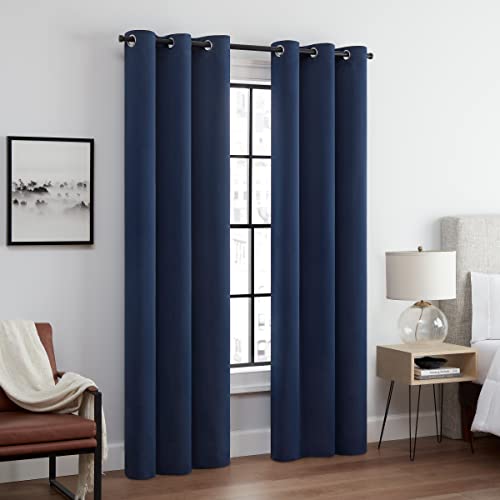
Eclipse built its name on light-blocking window treatments, and the Andover uses the brand’s triple-weave approach: black yarns woven tightly between two colored layers in a single fabric. There is no separate liner and no foam backing to crack or peel over time, so the panels stay flexible and hang with a natural drape that suits living rooms as much as bedrooms.
The grommet header keeps opening and closing effortless, which matters for panels you move twice a day. Triple-weave fabric darkens a room substantially and cuts glare on screens, making the Andover a practical pick for multipurpose spaces where complete darkness is less important than comfort and looks. Because the blackout effect comes from the weave itself, darker colors perform best.
- Construction: triple-weave fabric with black yarn core, no separate liner
- Header: grommet top
- Panels: sold as a two-panel set
- Care: machine washable
- Extras: foam-free construction that will not crack or peel
Best for: living rooms and multipurpose spaces that need glare control plus a natural fabric look.
H.VERSAILTEX Blackout Curtains

H.VERSAILTEX panels stand out for their header flexibility: each panel can hang from a rod pocket for a gathered look or from back tabs that create neat, tailored pleats and hide the rod from view. That makes them a good fit for guest rooms and primary bedrooms where the curtains are part of the decor.
The fabric is a dense triple-weave polyester that darkens rooms effectively and carries a thermal finish for insulation at the glass. Panels feel substantial without being unwieldy, and the matte finish avoids the sheen that makes some blackout fabrics look cheap. Sizes run from short café lengths to extra-long drops for tall windows. As with other single-layer weaves, expect very strong room darkening rather than absolute blackout in lighter colors.
- Construction: triple-weave blackout fabric with thermal finish
- Header: dual option, rod pocket or back tab
- Panels: sold as a two-panel set in many sizes
- Care: machine washable
- Extras: back-tab hanging gives a pleated, tailored appearance
Best for: style-conscious bedrooms and guest rooms that want flexible hanging options.
How to choose the right blackout curtains
Start by deciding how dark the room truly needs to be. True blackout means almost no light passes through the fabric itself, which matters for day sleepers, babies and light-sensitive sleepers. Room-darkening curtains block most light but can still glow faintly in strong sun. Marketing language blurs the two, so look at the construction rather than the label.
Construction is the biggest difference between models. Fully lined curtains, like the NICETOWN and BGment picks here, add a black backing layer that stops light regardless of the face color, which is why white panels can still black out a room. Triple-weave curtains weave black yarns into the middle of a single fabric; they are softer and wash easily, but performance depends more on color, with dark shades blocking the most light. Coated and foam-backed fabrics exist too, though they feel stiffer and the coating may degrade over years of washing.
Header style affects daily use. Grommet tops slide smoothly and suit curtains opened every morning. Rod pockets look traditional but drag on the rod, so they fit windows where panels stay in place. Back tabs split the difference, sliding reasonably well while presenting tidy pleats from the front.
Measuring matters as much as fabric choice. For width, plan on panels totaling one and a half to two times the window width so the fabric gathers and covers the edges fully. For length, mount the rod several inches above the frame and let panels end just above the floor or at the sill. Hanging panels wider than the glass prevents the bright halo around undersized curtains.
Finally, remember the side benefits. Dense blackout fabrics slow heat loss in winter, reduce summer heat gain and take the edge off traffic noise. They will not soundproof a room, but on a street-facing bedroom the difference is noticeable.
Who should skip blackout curtains
Blackout curtains are the wrong choice for rooms that depend on daylight. If a space doubles as a home office where you want morning sun, or it is full of houseplants that need bright light, a heavy blackout panel will fight you every day; consider light-filtering drapes or a dual rod with sheers instead.
They are also unnecessary if your windows already have well-fitted blackout roller shades or cellular blinds, since layering two blackout systems adds bulk without much extra darkness. And if you rent and cannot mount a rod wide or high enough to seal the edges, a temporary blackout shade that attaches to the glass itself may serve you better.
FAQ
What is the difference between blackout and room-darkening curtains?
Blackout curtains stop nearly all light passing through the fabric, usually with a black liner or a very dense weave. Room-darkening curtains block most light but still let a soft glow through, especially in pale colors and bright sun. For sleep-focused rooms, choose a lined blackout design; for living spaces, room-darkening is often enough.
How wide should blackout curtains be for a window?
Plan for the combined panel width to be one and a half to two times the width of the window or rod. That extra fabric lets the curtains gather attractively and cover the glass and frame edges fully when closed. Panels stretched exactly to the window width will leak light at the sides and look flat.
Do blackout curtains help with heat and noise as well?
Yes, to a moderate degree. Dense and lined fabrics add insulation at the window, slowing heat gain in summer and heat loss in winter. The same mass softens outside noise, though blackout curtains are not a soundproofing product and will not silence a busy road completely.
Can blackout curtains be machine washed?
Most modern blackout curtains, including all five picks in this guide, are machine washable on a gentle cycle with cold water. Lined and triple-weave fabrics tolerate washing better than old foam-backed styles, which could crack in the wash. Check the care label on your set, tumble dry low or line dry, and use a cool iron if needed.
Final verdict
For the darkest possible bedroom, choose a lined design: the NICETOWN grommet panels for easy daily sliding, or the BGment rod pocket set when you want pale colors that still block light completely. If appearance and easy care matter more than absolute darkness, the Deconovo panels are the dependable everyday option, the Eclipse Andover brings triple-weave durability to shared spaces, and the H.VERSAILTEX set adds tailored back-tab styling. Whichever you pick, measure generously and hang the rod high and wide, because fit turns good blackout fabric into a genuinely dark room.